Prisoners’ Education Trust – Course Prospectus 2026-2027
Download PET's Course Prospectus - our comprehensive guide to the distance learning courses we offer, with information on how to apply and how to prepare to study.
Jevonté | 01 April 2026
When I went to prison, I was forced to ask myself certain questions. “How did I get here?”
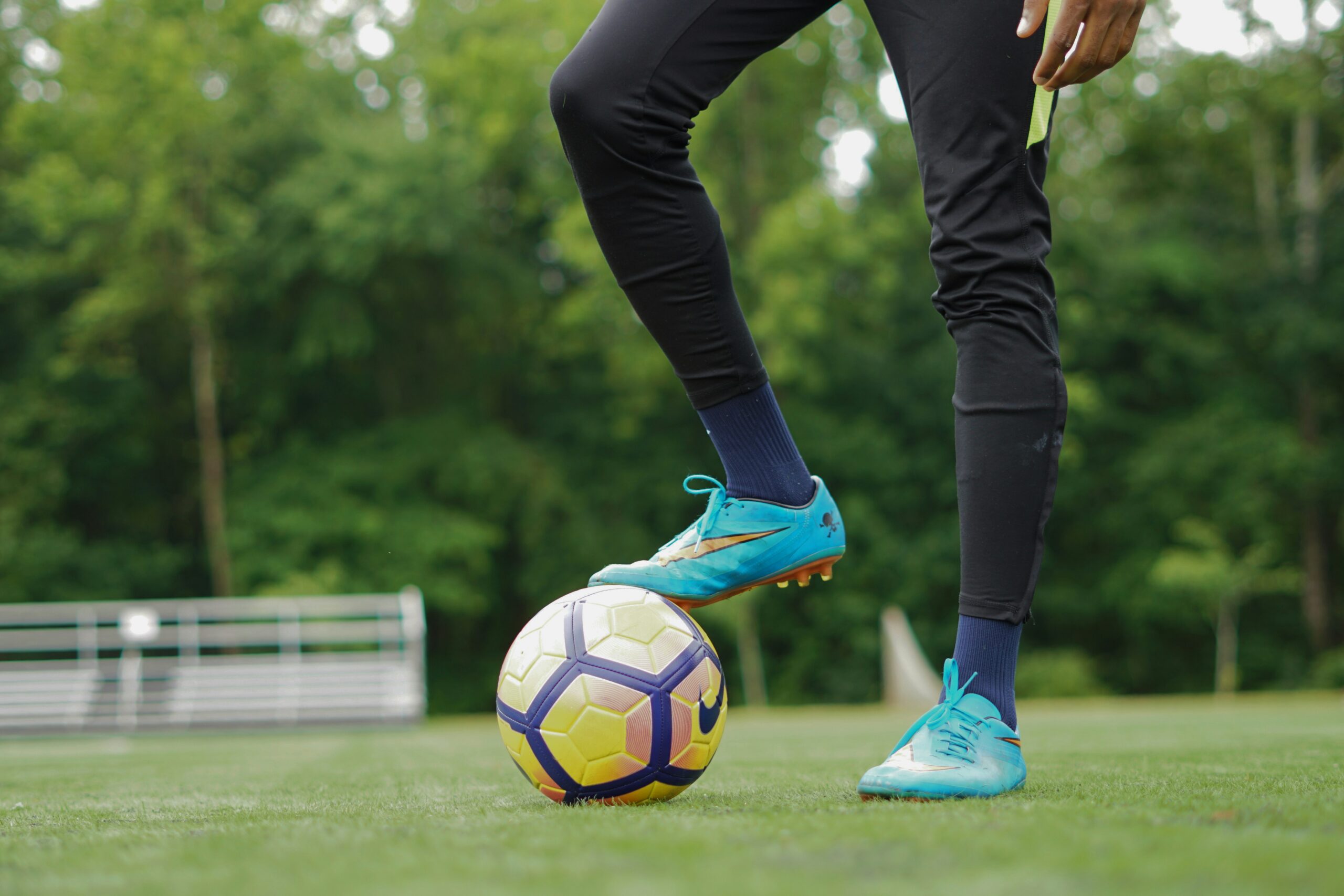
I traced my steps back: I was playing football from a young age at a high level. Then all of a sudden, a few years have passed. I don’t know where the time’s gone and now I’m in here.
Education was always important for my family. My parents are from Jamaica. I was actually born there and came here when I was three years old. Education for them was not free. “You have free education. You have to use it”: I heard that from a very young age.
I was always academically sound. So when football fell away from me, I made a decision: I’ve got these grades and I know my mum would love it if I went to university.
Perhaps I went for the wrong reasons: I didn’t finish uni because I ended up going to prison. I channelled my energy in the wrong lane. If you play foolish games, obviously you get foolish prizes.
I went to prison in June 2020, so the covid lockdown had already hit.
I had not been before but I knew people that had, so I was expecting a certain environment. Immediately I realised things were different because we’re on 23-hour lockdown because of the conditions outside. Travelling to different wings wasn’t an option. Education wasn’t an option. Football wasn’t an option.
You’re in a cell on your own or with somebody else that you don’t know for 23 hours of the day. I was allowed out for one hour: half an hour on exercise and half an hour for shower and things like that.
I said to myself, upon release: I’m not going back there. I’m going to use my experience of negativity.
When I was in prison, I had a friend who I’d drawn close to in there, and he always used to talk about positive things. He was very wise, but he was someone who was known for the wrong reasons. When I came home, I got a phone call that he’d died. He got killed. And that stuck out to me.
When you’re in prison you spend a lot of time with people. You start to see pieces of them that maybe they don’t show the whole world because of the intimacy of that context. My friend wasn’t an idiot. He was very smart. I know he chose to channel it in the wrong way, but now his life has just been snatched from him. And I’m sure there’s thousands of kids who are in the same position.
Being forced to face the mortality of our existence, it made me think: how can I give back to people to steer them in a different direction?
I started to go into football coaching and working with young people. I could see a lot of myself in a lot of these young kids who are playing football and who are very ambitious – who have a fire inside them that their environment doesn’t necessarily allow them to shine.
I said to myself: how do I get these kids to think differently at this stage of their development, rather than going through what I had to go through in order to see it?
That’s basically what I had to do: just use my own experiences. To make them realise that: you don’t have to go through all these things to get here, that there’s other ways; you can focus on this and if it doesn’t work then you can fall on that; to always believe in yourself – you’re capable enough to do anything you want to do; you don’t have to be like your friends.
These kind of phrases, these kind of mindsets: that’s the driving force of what I want to do in my coaching now.
I started my business Never Give Up Coaching in 2022 and I’ve been building up slowly. Now I have a social media presence – Instagram, TikTok and Substack – where people come to me.
I’ve also linked up with a few academies and organisations. For example, I work with a company that does football camps throughout the half term. They found me on Instagram and messaged me. I’ve gone there a few times and before you know it, I was the head coach there.
Education isn’t only about what you learn at school or any maths equation. Education is your learned experience. A conversation can educate you. An interaction can educate you.
If I put myself in the mind of a student, I think the most important quality of a great coach is, “How much can I relate to this person?” I think relatability is a massive quality for anyone who’s teaching anything, any educator.
I think the teacher that gets the most out of their students is the teacher that sees value in you, that you can speak to, who takes their time with you, who really cares about what they’re teaching you.
When I’m coaching, I help the kids to understand these qualities I am teaching them are applicable on and off the pitch. I want you to be the best son you can be, the best friend you can be, the best motivator you can be.
When you’re playing in matches, can you show the best attitude? Are you the best listener? When you’re losing, do people look at you and say, “Well, he’s not giving up”, and follow your energy?
These little pointers will stand out more for me than someone who is just going to sit there and talk about the sport – “do this with your right foot, do a stepover, score top bins”. I think it’s more about their development – not only in the sport that you’re teaching, but in the context of their growth as a person.
The feeling of giving back motivates me. I love what I do: just to see the joy on the kids’ faces. Seeing that light makes me want to motivate them to be the best that they can be.
I would encourage anyone who’s looking at PET’s new Sports Coaching course. You might be thinking, “Well, I do have a sporting background”, but there’s a lot of background noise that can make you think “How am I going to do this?” or “What am I going to do with it?”. I would say, the race isn’t finished.
If this is what is calling you, standing out to you the most, then take a step. You don’t know where you’re going to end up, so I would encourage anybody to step out in faith and just see where it takes them.
One of the reasons I reached out to PET is that there’s a lot of value in people who are disadvantaged seeing stories of people on the road to success or change. When people see that it’s possible, I think it does motivate, it does inspire, it does help.
Donate to PET and help people in prison start out on the road to success. You can also sign up to our email newsletter.
Download PET's Course Prospectus - our comprehensive guide to the distance learning courses we offer, with information on how to apply and how to prepare to study.
© Prisoners' Education Trust 2026